Aligning Payout Verification Timelines During Switches Between Reel Formats and Table Games in Digital Casino Platforms
Written by Yves Beck · Nov 19, 2026

Aligning Payout Verification Timelines During Switches Between Reel Formats and Table Games in Digital Casino Platforms
Digital casino environments require precise coordination between payout verification processes and player movements from reel-based slots to table games such as blackjack or roulette; operators track these shifts because verification timelines often differ depending on game type and transaction volume. Data from regulatory filings shows that seamless synchronization reduces processing delays by connecting automated checks with real-time game state updates while players change formats mid-session.
Core Elements of Game Format Transitions
Reel formats operate on randomized number generators with fixed payout structures that trigger verification once certain thresholds are met, whereas table games involve live dealer interactions and variable bet resolutions that demand additional confirmation steps. Operators integrate backend systems to monitor these changes, using APIs that flag when a player exits a slot session and enters a card or wheel environment so verification queues adjust accordingly. Studies released in November 2026 by the Victorian Commission for Gambling and Liquor Regulation highlighted how such transitions affect average verification windows, with figures revealing an average 12-second extension when moving from automated reels to interactive tables.
Platform architecture plays a central role because reel games generate high-frequency small wins that clear quickly through scripted rules, but table games produce larger irregular payouts requiring manual review layers. Technicians configure software to carry verification status across formats, preventing restarts that frustrate users and inflate support tickets. According to reports from the Nevada Gaming Control Board, platforms employing unified verification pipelines saw consistent reductions in dispute rates during peak evening hours when format switches occur most frequently.
Verification Timeline Mechanics
Verification timelines start the moment a payout request registers, yet they must adapt when players move between formats because table games often invoke additional anti-fraud protocols tied to dealer logs and bet histories. Systems employ timestamp synchronization protocols that pause or accelerate checks based on detected transitions, ensuring the overall process remains within regulatory windows set by licensing jurisdictions. One documented case involved a major European operator that linked reel-to-table movement logs directly to its payment processor, cutting average verification time from 45 seconds to under 30 seconds across thousands of daily sessions.
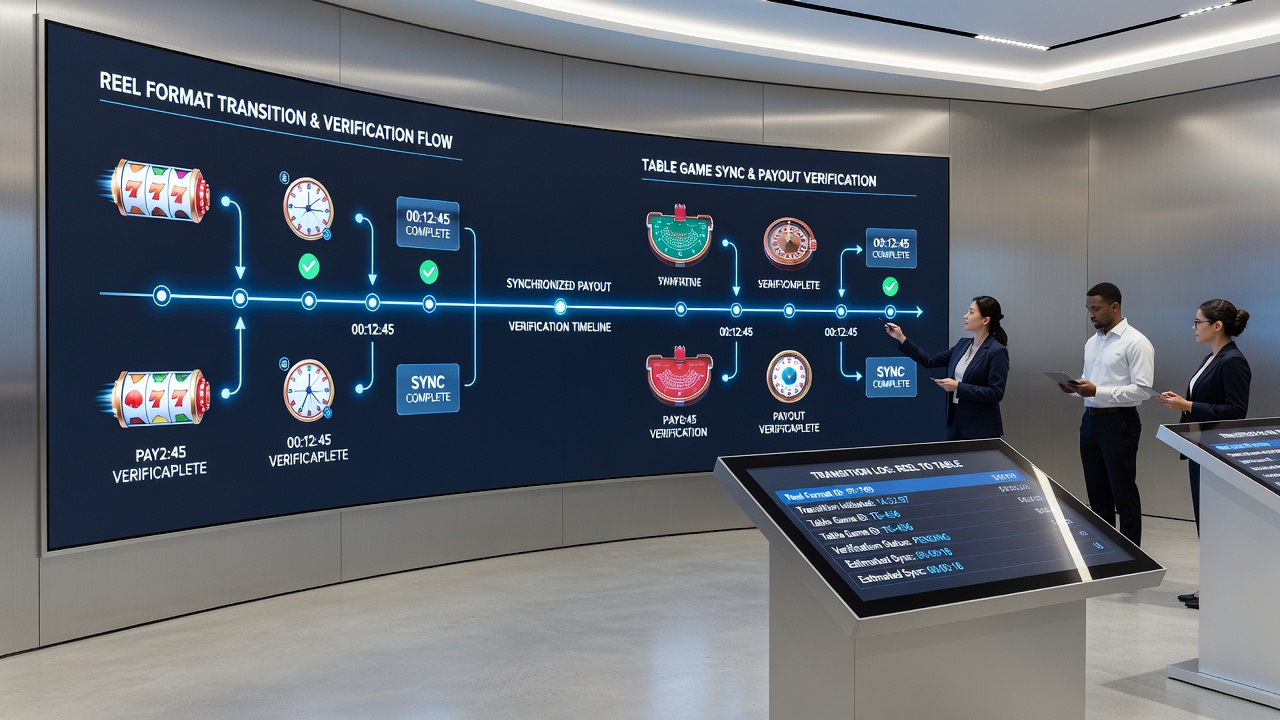
Security layers add complexity because reel payouts undergo RNG audits at the point of generation while table outcomes rely on streamed video feeds and dealer authentication. When synchronization works properly, the system carries forward any pending flags from the first game type without forcing a full re-verification. Research from academic institutions tracking online gaming patterns indicates that mismatched timelines lead to session abandonment rates climbing above 8 percent during high-traffic periods.
Implementation Strategies Across Platforms
Operators deploy modular verification engines capable of reading game metadata in real time, allowing them to recalibrate timelines the instant a transition registers. These engines pull data from both slot servers and table management modules, merging the information into a single verification thread that respects the stricter requirements of whichever format currently holds the player's attention. In practice, this approach means a player completing a large reel jackpot can shift to a live dealer table and continue without interruption if the initial verification has already cleared core compliance checks.
Database partitioning helps maintain speed because historical transaction records from reels stay separate from table logs until a cross-format query is needed. Staff training programs emphasize recognizing transition points so human reviewers can prioritize accordingly, and automated alerts notify compliance teams when unusual patterns emerge across game types. Data compiled through November 2026 showed platforms using these partitioned systems maintained verification accuracy above 99.2 percent even during format-heavy sessions.
Regulatory and Technical Considerations
Regulatory bodies require that verification processes remain transparent and auditable regardless of game switches, which pushes developers to embed detailed logging at every transition point. Compliance audits examine whether timeline adjustments respect maximum allowable windows for both reel and table environments, with penalties applied when synchronization failures cause excessive delays. Industry associations have published guidelines recommending that verification scripts include fallback procedures for cases where a player exits before a check completes, ensuring funds stay secured until resolution.
Encryption standards protect the data flow between formats, preventing interception during the brief windows when verification status transfers. Observers note that operators investing in these standards report fewer regulatory inquiries because audit trails remain intact and easily retrievable. The reality is that effective synchronization depends on constant monitoring of both game servers and payment gateways to catch desync issues before they reach players.
Conclusion
Successful alignment of payout verification timelines with reel-to-table transitions rests on integrated systems, clear regulatory frameworks, and ongoing technical refinement. Platforms that maintain accurate cross-format tracking deliver smoother experiences while meeting compliance standards set by multiple jurisdictions. Continued development in this area focuses on reducing latency and strengthening audit capabilities as digital casino traffic grows.